


Showing posts with label indian music. Show all posts
Showing posts with label indian music. Show all posts
VINA

Rudra vina is also known as bin (been), appears to be oldest style of vina such evidence is its construction in the shape of old temples.

The Vina is one of the most ancient and important instruments of South India. Earlier, any stringed instrument was known as a Vina. However, what we now associate with this word is a 7- stringed, 24-fretted instrument. Owing to its rich and long tradition, there have been several exponents of this instrument and consequently a lot of different styles. The Vina is considered one of the loveliest instruments of Carnatic music for its sweet tone and ability to produce all the nuances and ornamentations unique to this system of music.

Construction: Made of jack wood, the Vina consists of a hollow resonator carved out of a single block of wood that continues as a long fretted neck to which is attached another smaller resonator. The neck curves backwards and at the end is a carved head of a mythological animal.

Tuning: In ancient times, the Vina had several strings, each tuned to a different note. The modern Vina with a range of three and a half octaves was perfected by Govinda Dikshitar, Prime Minister to the ruler of Tanjavur, Raghunatha Nayak in the 17th century. The last string (i.e. closest to the artiste) which is the main string, is tuned to the tonic note Sa, i.e., the Adhara Shadja, which can be of any convenient pitch. The other strings are tuned in relation to that note. The third string is tuned to the lower fifth perfect, Pa, the second to the tonic note, Sa in the lower octave and the first string, again to Pa, an octave lower than the Pa of the third string. The side strings, (called the Tala strings) are tuned to the tonic Sa, Pa and again, Sa in the higher octave from the top to bottom respectively. Again, if needed, the middle string, Pa could be changed to Ma when Madhyama Sruti is required. In the olden days, the pitch used to be in the range of 4 - 5 kattai (F and G), but it has now been standardised to 2 1/2 (D #).
BACK

INDIAN MUSIC
The indian music is broadly classified in two categories Carnatic music and western music
CARNATIC
 HINDUSTANI

Indian classical music is categorized under two genres. These are Hindustani and Carnatic. Broadly speaking, Carnatic music developed in the south of the country, while Hindustani is indigenous to the north.
Hindustani music is based on the raga system. A raga is a melodic scale, consisting of notes from the basic seven known as sa, re, ga, ma pa, dha, and ni. Apart from sa and pa which are constant, the other notes may be in major or minor tone, and this gives rise to innumerable combinations. Ten basic scales or thaats are recognized, and other ragas are considered to have evolved from these. A raga must contain a minimum of five notes.
Depending on the notes included in it, each raga acquires a distinct character. The form of the raga is also determined by the particular pattern of ascent and descent of the notes, which may not be strictly linear. Melody is built up by improvising and elaborating within the given scale. The improvisation is at times rhythm bound and at other times free from any overt rhythm.
Formal compositions (songs or instrumental compositions in a fixed meter) are juxtaposed with the improvised portion. Khyal and Dhrupad are two major types of compositions within the Hindustani genre. Of the two, Dhrupad is an older form and requires rigourous training in rhythm control as well as voice culture. Khyal developed as a more popular alternative as it contains both slow and lively compositions, though it retains its totally classical character.
CARNATIC
 HINDUSTANI
Indian classical music is categorized under two genres. These are Hindustani and Carnatic. Broadly speaking, Carnatic music developed in the south of the country, while Hindustani is indigenous to the north.
Hindustani music is based on the raga system. A raga is a melodic scale, consisting of notes from the basic seven known as sa, re, ga, ma pa, dha, and ni. Apart from sa and pa which are constant, the other notes may be in major or minor tone, and this gives rise to innumerable combinations. Ten basic scales or thaats are recognized, and other ragas are considered to have evolved from these. A raga must contain a minimum of five notes.
Depending on the notes included in it, each raga acquires a distinct character. The form of the raga is also determined by the particular pattern of ascent and descent of the notes, which may not be strictly linear. Melody is built up by improvising and elaborating within the given scale. The improvisation is at times rhythm bound and at other times free from any overt rhythm.
Formal compositions (songs or instrumental compositions in a fixed meter) are juxtaposed with the improvised portion. Khyal and Dhrupad are two major types of compositions within the Hindustani genre. Of the two, Dhrupad is an older form and requires rigourous training in rhythm control as well as voice culture. Khyal developed as a more popular alternative as it contains both slow and lively compositions, though it retains its totally classical character.
S RAJAM
41, Nadu Street, Mylapore,
Chennai 600004
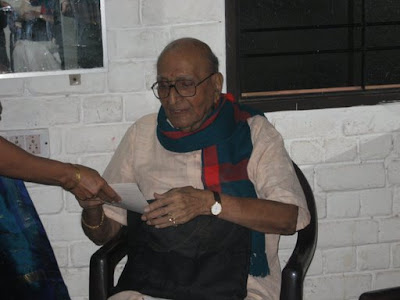
A multifaceted personality Shri. S.Rajam was born on 10.02.1919 to Shri.V.Sundaram Iyer and his wife Chellammal. His father was a reputed advocate and a great scholar in carnatic music. Hereditary and environment helped shape Shri.Rajam as an exponent of various art forms: Drawing, Painting, Music to name a few.

Rajam had his training in music from maestros of music like Ambi Dikshitar, Ariyakudi Ramanuja Iyengar, Papanasam Sivan and Madurai Mani Iyer. He has been giving performances from a very young age of thirteen. At the age of fifteen he developed his drawing skill. He joined The School of Arts and furthered his skills.

Rajam worked as music supervisor with AIR, where he popularised South Indian Music. During his tenure, he recorded rare songs of Vaggeyakars, produced many operas and musical plays. He has been instrumental in bringing out 72 Melakartha Kirthanas of Koteeswara Iyer. He has popularised Thirukkural by singing them. He has toured the whole of India and has visited many foreign countries U.S.A., Canada, Africa, Ceylon etc.. He is a member of the expert committee of The Music Academy. He has been training a lot of students.

Rajam through his drawings has drawn the attention of one & all towards the ancient culture of our country. He is a reputed painter in water colour. His drawings are a rare blend of traditional style with his unique touch. He has brought the forms of Vaggeyakaras of Carnatic Music, Epic characters of our Puranas, Gods & Goddesses to life through his drawings. For example his paintings of the trinities adorn the walls of The Music Academy, his paintings of Navagrahas find their place in the pooja rooms of many a home.
Rajam’s artistic abilities have won accolades. The notable are Sangeet Natak Academy award, Sangita Kala Acharya award & the Isai Kalai Chemmal award.

Rajam has the unique distinction of combining successfully his musical & drawing abilities for well over six decades and is contributing a lot to enrich our culture.
BACK
Chennai 600004

A multifaceted personality Shri. S.Rajam was born on 10.02.1919 to Shri.V.Sundaram Iyer and his wife Chellammal. His father was a reputed advocate and a great scholar in carnatic music. Hereditary and environment helped shape Shri.Rajam as an exponent of various art forms: Drawing, Painting, Music to name a few.

Rajam had his training in music from maestros of music like Ambi Dikshitar, Ariyakudi Ramanuja Iyengar, Papanasam Sivan and Madurai Mani Iyer. He has been giving performances from a very young age of thirteen. At the age of fifteen he developed his drawing skill. He joined The School of Arts and furthered his skills.

Rajam worked as music supervisor with AIR, where he popularised South Indian Music. During his tenure, he recorded rare songs of Vaggeyakars, produced many operas and musical plays. He has been instrumental in bringing out 72 Melakartha Kirthanas of Koteeswara Iyer. He has popularised Thirukkural by singing them. He has toured the whole of India and has visited many foreign countries U.S.A., Canada, Africa, Ceylon etc.. He is a member of the expert committee of The Music Academy. He has been training a lot of students.

Rajam through his drawings has drawn the attention of one & all towards the ancient culture of our country. He is a reputed painter in water colour. His drawings are a rare blend of traditional style with his unique touch. He has brought the forms of Vaggeyakaras of Carnatic Music, Epic characters of our Puranas, Gods & Goddesses to life through his drawings. For example his paintings of the trinities adorn the walls of The Music Academy, his paintings of Navagrahas find their place in the pooja rooms of many a home.
Rajam’s artistic abilities have won accolades. The notable are Sangeet Natak Academy award, Sangita Kala Acharya award & the Isai Kalai Chemmal award.

Rajam has the unique distinction of combining successfully his musical & drawing abilities for well over six decades and is contributing a lot to enrich our culture.
BACK
TK Govinda Rao
17, 11th Street, Indira Nagar,
Chennai 600 020. Tel: +44-24413589

Sangitha Kalanidhi T.K.Govinda Rao is a musician's musician and a musicologist. He trained extensively under Musiri Subramania Iyer for about 15 years-- a period he recalls with fondness and gratitude as a 'great boon' in his musical life-- and also under Tirupambaram Sri Swaminatha Pillai, and Brindamma. He is known for his sahitya shuddham, laya gnyaanam and bhaava-pradhaana neraval singing.

He has also had a parallel career working at the Madras Music College as a teacher, at AIR Chennai as a Producer and at AIR Delhi as Chief Producer. He is a veteran teacher and has trained a number of students. His books on the compositions of the Trinity and other Carnatic composers are extremely well regarded. The Carnatic music community eagerly looks forward to his upcoming book, "Varnamanjari", a collection of 400 Tana, Pada, Chauka and Daru Varnams in different Talas.

Veteran musician Shri T K Govinda Rao performed at HTCC Bothell on September 8, 2007. The accompanists were Nishanth Chandran on the violin, Shriram Bhramanandam on the mridangam and Ravi Balasubramanian on the ghatam.

The concert started with the popular varnam (Ninnu kori) in Mohanam. It was amazing to hear Shri Govinda Rao render the pallavi, anupallavi and chittaiswaram in 5 speeds including tisram and mel-tisram! It demonstrated his innate mastery over layam and was flawlessly executed.

Before a detailed alaapana of Kambhoji, Shri TKG presented another rare krithi-- "Ananda saagara", a Thyagaraga composition with a beautiful chittaiswaram, in the ragam Garudadhwani. The krithi chosen for Kambhoji was the Dikshitar masterpiece, "Shree subramanyaya namaste". While I was expecting this to be the main piece of the concert, the song was not elaborated with any neraval or swaras. He then presented "Nagumomu" in Abheri ( immortalized by his guru Musiri Subramanya Iyer) after a short alapana. I was a bit disappointed in not hearing a neraval for "jagamella paramatma", but I understand the artists had to comply with time constraints and close in time for the temple pooja. The concert ended with a Ragamalika piece of Purandaradasar and a Thillana.
BACK
Chennai 600 020. Tel: +44-24413589

Sangitha Kalanidhi T.K.Govinda Rao is a musician's musician and a musicologist. He trained extensively under Musiri Subramania Iyer for about 15 years-- a period he recalls with fondness and gratitude as a 'great boon' in his musical life-- and also under Tirupambaram Sri Swaminatha Pillai, and Brindamma. He is known for his sahitya shuddham, laya gnyaanam and bhaava-pradhaana neraval singing.

He has also had a parallel career working at the Madras Music College as a teacher, at AIR Chennai as a Producer and at AIR Delhi as Chief Producer. He is a veteran teacher and has trained a number of students. His books on the compositions of the Trinity and other Carnatic composers are extremely well regarded. The Carnatic music community eagerly looks forward to his upcoming book, "Varnamanjari", a collection of 400 Tana, Pada, Chauka and Daru Varnams in different Talas.

Veteran musician Shri T K Govinda Rao performed at HTCC Bothell on September 8, 2007. The accompanists were Nishanth Chandran on the violin, Shriram Bhramanandam on the mridangam and Ravi Balasubramanian on the ghatam.

The concert started with the popular varnam (Ninnu kori) in Mohanam. It was amazing to hear Shri Govinda Rao render the pallavi, anupallavi and chittaiswaram in 5 speeds including tisram and mel-tisram! It demonstrated his innate mastery over layam and was flawlessly executed.

Before a detailed alaapana of Kambhoji, Shri TKG presented another rare krithi-- "Ananda saagara", a Thyagaraga composition with a beautiful chittaiswaram, in the ragam Garudadhwani. The krithi chosen for Kambhoji was the Dikshitar masterpiece, "Shree subramanyaya namaste". While I was expecting this to be the main piece of the concert, the song was not elaborated with any neraval or swaras. He then presented "Nagumomu" in Abheri ( immortalized by his guru Musiri Subramanya Iyer) after a short alapana. I was a bit disappointed in not hearing a neraval for "jagamella paramatma", but I understand the artists had to comply with time constraints and close in time for the temple pooja. The concert ended with a Ragamalika piece of Purandaradasar and a Thillana.
BACK


M Balamurali Krishna
Balamurali Krishna
3, Kanakasri Nagar, Chennai 600 086.
Tel: 00-91-(0)-44-28110192

M. BALAMURALI KRISHNA, an icon of durability, has held his head high in the ever demanding, swirling, deep waters of the ocean of South Indian music, due to several attributes. In spite of advancing years, the amazing power, fluency and range of the vocal chords, the superb breath control, stellar enunciation and the extraordinary ability to communicate with the audience, bring a touch of the grandiose to his performing calibre.

His concert for the Vijay TV music festival, comprised four songs, three compositions of his own, and an utsava samprayada kriti of Tyagaraja, "Nagumomu" in Madhyamavati.

"Pari pari nee padhame" in Hamsadhvani with Swarakshara poruthams aplenty, and the ingenious permutations and combinations in the kalpanaswaras proved the statement that winners do not do different things, they do things differently

It was a very welcome alapana of Karaharapriya that made the evening for the audience. Strictly conforming to the treasured traditional prayogas of the raga, Balamurali created an environment of outstanding classical excellence.

"Unnai ninaindurugayile" with an unusual structure, in praise of Lord Muruga, the easy swara flow, and the Rishabha Kuraippu with the singer's individual brilliance coming to the fore, were effulgent attempts that left the rasikas enchanted. Raghavendra Rao the violinist has a commendable musical head on his shoulders, and his Karaharapriya expansion and the answering swara statements showed that he is knocking on the doors of recognition assertively.
BACK
3, Kanakasri Nagar, Chennai 600 086.
Tel: 00-91-(0)-44-28110192

M. BALAMURALI KRISHNA, an icon of durability, has held his head high in the ever demanding, swirling, deep waters of the ocean of South Indian music, due to several attributes. In spite of advancing years, the amazing power, fluency and range of the vocal chords, the superb breath control, stellar enunciation and the extraordinary ability to communicate with the audience, bring a touch of the grandiose to his performing calibre.

His concert for the Vijay TV music festival, comprised four songs, three compositions of his own, and an utsava samprayada kriti of Tyagaraja, "Nagumomu" in Madhyamavati.

"Pari pari nee padhame" in Hamsadhvani with Swarakshara poruthams aplenty, and the ingenious permutations and combinations in the kalpanaswaras proved the statement that winners do not do different things, they do things differently

It was a very welcome alapana of Karaharapriya that made the evening for the audience. Strictly conforming to the treasured traditional prayogas of the raga, Balamurali created an environment of outstanding classical excellence.

"Unnai ninaindurugayile" with an unusual structure, in praise of Lord Muruga, the easy swara flow, and the Rishabha Kuraippu with the singer's individual brilliance coming to the fore, were effulgent attempts that left the rasikas enchanted. Raghavendra Rao the violinist has a commendable musical head on his shoulders, and his Karaharapriya expansion and the answering swara statements showed that he is knocking on the doors of recognition assertively.
BACK
Subscribe to:
Posts (Atom)


